Mens Bracelet Size Guide for the Right Fit

Welcome to our store! Discover amazing deals and top products today.
A bracelet can look powerful in a product photo and still feel wrong the second it hits your wrist. Too tight, and it distracts you all day. Too loose, and it loses that clean, confident finish that makes men’s jewelry look intentional. That is why a mens bracelet size guide matters - not just for comfort, but for how the piece actually wears, moves, and completes your style.
The right size should feel natural. You should be able to type, drive, lift a coffee, or head into a meeting without thinking about it every few minutes. Whether you wear black onyx for focus, tiger eye for confidence, or howlite for calm, the fit is what turns a bracelet from an accessory into part of your everyday presence.
How to measure your wrist accurately
The simplest way to get your bracelet size is to measure your wrist where you plan to wear the bracelet. Use a flexible measuring tape if you have one. Wrap it around your wrist just above the wrist bone, keep it snug but not tight, and note the measurement in inches.
If you do not have a measuring tape, use a strip of paper, string, or even a phone charging cable in a pinch. Wrap it around your wrist, mark where it overlaps, then lay it flat against a ruler. That number is your actual wrist size.
This part matters - do not guess. A lot of men assume they have an average wrist and order based on that. Sometimes they are right. Often they are not. Even a half-inch can change how a beaded bracelet sits, especially when the stones have a substantial, handcrafted feel.
Measure twice if you can. If you are shopping for a gift, try borrowing a watch, using an existing bracelet, or asking in a casual way. The closer the base measurement, the better the final fit.
Mens bracelet size guide by wrist measurement
Once you know your wrist size, you usually add a little room depending on how you want the bracelet to fit. For most men, the general rule is simple.
A close fit is your wrist measurement plus about a quarter to half an inch. This gives you a neat, tailored look that stays in place and feels sharp, especially with slimmer bead sizes.
A comfort fit is your wrist measurement plus about half an inch to three quarters of an inch. For most men, this is the sweet spot. It feels easy, looks balanced, and works well for daily wear.
A relaxed fit is your wrist measurement plus about three quarters of an inch to one inch. This gives the bracelet more movement and a looser silhouette. Some men prefer that look, especially when stacking multiple pieces, but it can feel less precise.
In practical terms, a man with a 7-inch wrist will often wear a 7.5-inch bracelet comfortably. A 7.25-inch wrist may prefer 7.75 inches. An 8-inch wrist may feel best around 8.5 inches, depending on bead size and personal taste.
Why bracelet style changes the fit
Not every bracelet wears the same, even at the same length. This is where many size charts fall short.
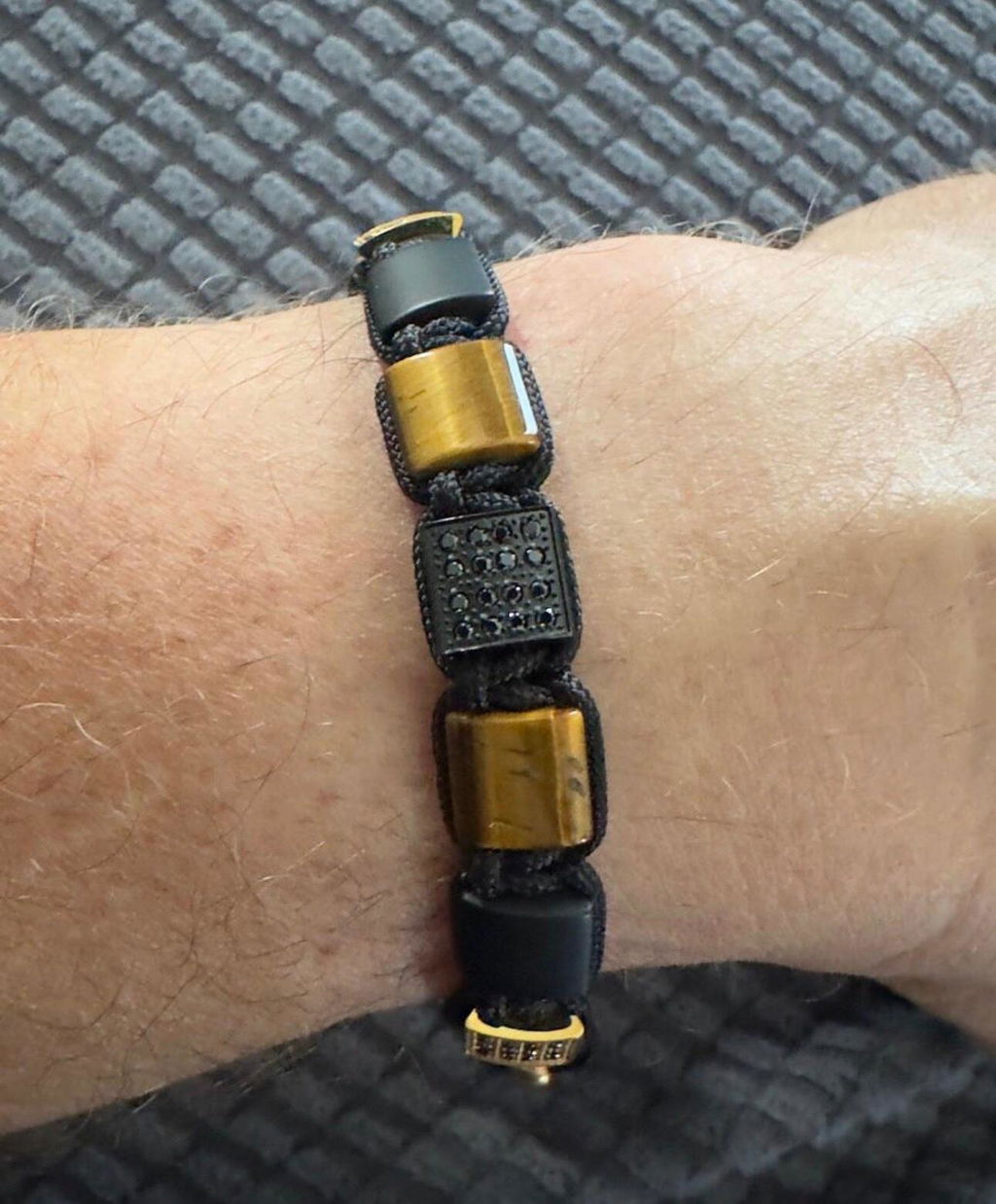
Beaded gemstone bracelets usually have more visual volume than slim chain bracelets. A bracelet made with 8mm natural stones will feel different from one made with 6mm beads because the larger beads take up more space around the wrist. The inside circumference can feel slightly smaller, even if the listed size is technically the same.
Leather bracelets also vary. A single-wrap leather bracelet may fit true to size, while a thicker braided design can feel firmer against the wrist. If the leather is structured rather than soft, you may want a touch more room.
Chain bracelets tend to offer the most flexibility visually, but they still need proportion. Too loose, and they can slide awkwardly toward the hand. Too tight, and they lose that effortless masculine finish.
Stretch bracelets deserve special attention. They are forgiving, which makes them popular, but that does not mean any size will do. If a stretch bracelet is too small, the cord stays under tension and the beads sit unnaturally apart. If it is too large, the bracelet rotates too much and can look oversized instead of refined.
How a men’s bracelet should fit
A good bracelet should move slightly, but not constantly. It should slide over the wrist with ease if it is a stretch style, or close securely without pinching if it uses a clasp. Once it is on, it should sit close enough to feel intentional and loose enough to stay comfortable through the day.
A quick fit test helps. You should be able to slip one finger between the bracelet and your wrist without forcing it. That usually signals a balanced fit. If two fingers fit easily with room to spare, it may be too loose. If you cannot get one finger under it at all, it is likely too tight.
Style also plays a role. If you want a cleaner, more polished look for business casual outfits, lean closer to a comfort fit than a relaxed one. If you want to stack bracelets with a watch or combine stones for a layered look, a little extra room can help, but only slightly. Too much slack makes a stack look messy instead of elevated.
Common sizing mistakes to avoid
The biggest mistake is buying by assumption instead of measurement. The second is ignoring material and bead size.
Another common issue is choosing a bracelet based only on how it looks laid flat. A bracelet can appear compact in the hand and still fit large once worn. The opposite happens too, especially with thicker gemstone beads. What matters is how the inner circumference works with your wrist.
Gift buyers often make one of two mistakes - choosing the smallest safe option because they do not want it to slide, or sizing up too much to be cautious. In most cases, aiming for an average men’s comfort fit works better than either extreme, unless you know the recipient has especially slim or broad wrists.
One more point that gets overlooked is swelling. Your wrist can change slightly throughout the day based on heat, activity, travel, and hydration. If you are between sizes, think about when and how you will wear the bracelet most. For daily wear, a little comfort room is usually the smarter call.
Choosing the right fit for your style
A bracelet says something before you do. That is why fit should match not only your wrist, but your presence.
If your style is minimal and sharp, a closer fit often works best. Black onyx, matte stones, and silver accents look especially clean when the bracelet sits with control rather than excess movement. It feels modern, masculine, and deliberate.
If your look is more relaxed, a slightly looser fit can work well with layered textures like leather, mixed stones, or stacked bracelets. The key is restraint. Looser should still look composed.
If you are wearing a symbolic stone for a reason beyond style, fit matters even more. A bracelet tied to focus, strength, balance, or protection should feel like something you can wear with confidence every day. When a piece fits well, you stop adjusting it and start owning it.
What to do if you are between sizes
If you land between two measurements, your best option depends on the bracelet design and the feel you want.
For stretch gemstone bracelets, most men do better sizing up rather than down, especially with larger beads. That keeps the bracelet comfortable and helps preserve the shape. For leather and clasp bracelets, the right choice depends on how structured the design is. Softer materials can settle in with wear, while stiffer styles may need more breathing room from day one.
If you are shopping for someone else and cannot measure exactly, average men’s bracelet sizes usually fall around 7.5 to 8 inches. That will not solve every situation, but it is often the safest starting point for giftable everyday styles.
A well-made bracelet should do more than fit your wrist. It should fit your routine, your wardrobe, and the energy you want to carry into the day. Get the size right, and the piece feels less like an add-on and more like part of who you are.
Image Gallery
Inspirational Lifestyle Note
Fashion is not merely about what you wear; it is an unspoken declaration of your personal identity. A masterfully curated piece of color-block knitwear is the ultimate testament to a woman's confidence and modern aesthetic intelligence.
Current Top Sellers
Shop now and enjoy deals!
Current Top Sellers